Fake news or hoax news is false or misleading information (hoaxes, propaganda, and disinformation) presented as news.
Although false news has always been spread throughout history, the term "fake news" was first used in the 1890s when sensational reports in newspapers were common.
Nevertheless, the term does not have a fixed definition and has been applied broadly to any type of false information.
It's also been used by high-profile people to apply to any news unfavorable to them. Further, disinformation involves spreading false information with harmful intent and is sometimes generated and propagated by hostile foreign actors, particularly during elections. In some definitions, fake news includes satirical articles misinterpreted as genuine, and articles that employ sensationalist or clickbait headlines that are not supported in the text.
Because of this diversity of types of false news, researchers are beginning to favour information disorder as a more neutral and informative term.
The prevalence of fake news has increased with the recent rise of social media, especially the Facebook News Feed, and this misinformation is gradually seeping into the mainstream media. Several factors have been implicated in the spread of fake news, such as political polarization, post-truth politics, motivated reasoning, confirmation bias, and social media algorithms.
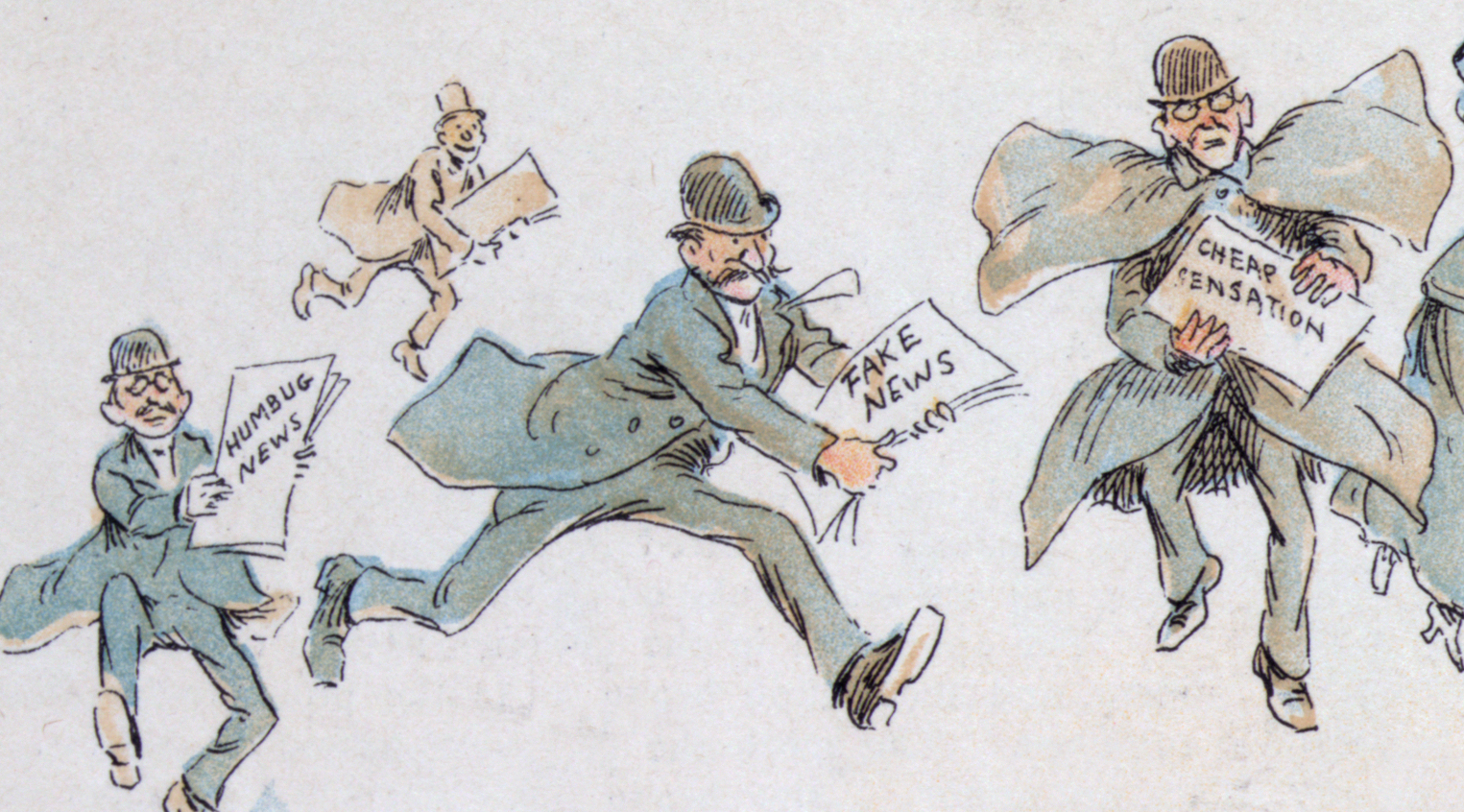
Fake news websites are websites on the Internet that deliberately publish fake news—hoaxes, propaganda, and disinformation purporting to be real news—often using social media to drive web traffic and amplify their effect.
Unlike news satire, fake news websites deliberately seek to be perceived as legitimate and taken at face value, often for financial or political gain.
Such sites have promoted political falsehoods in India, Germany, Indonesia, the Philippines, Sweden, Mexico, Myanmar, and the United States. Many sites originate in, or are promoted by, Russia, North Macedonia, and Romania, among others. Some media analysts have seen them as a threat to democracy.
In 2016, the European Parliament's Committee on Foreign Affairs passed a resolution warning that the Russian government was using "pseudo-news agencies" and Internet trolls as disinformation propaganda to weaken confidence in democratic values.

Propaganda is communication that is primarily used to influence or persuade an audience to further an agenda, which may not be objective and may be selectively presenting facts to encourage a particular synthesis or perception, or using loaded language to produce an emotional rather than a rational response to the information that is being presented.
Propaganda can be found in a wide variety of different contexts.
In the 20th century, the English term propaganda was often associated with a manipulative approach, but historically, propaganda has been a neutral descriptive term of any material that promotes certain opinions or ideologies.
Equivalent non-English terms have also largely retained the original neutral connotation.
A wide range of materials and media are used for conveying propaganda messages, which changed as new technologies were invented, including paintings, cartoons, posters, pamphlets, films, radio shows, TV shows, and websites. More recently, the digital age has given rise to new ways of disseminating propaganda, for example, bots and algorithms are currently being used to create computational propaganda and fake or biased news and spread it on social media.
Propaganda was conceptualized as a form of influence designed to build social consensus. In the 20th century, the term propaganda emerged along with the rise of mass media, including newspapers and radio. As researchers began studying the effects of media, they used suggestion theory to explain how people could be influenced by emotionally-resonant persuasive messages. Harold Lasswell provided a broad definition of the term propaganda, writing it as: "the expression of opinions or actions carried out deliberately by individuals or groups with a view to influencing the opinions or actions of other individuals or groups for predetermined ends and through psychological manipulations.